If you are looking for the best platforms for options trading in Gauteng, South Africa, the available choices generally fall into two categories: local institutional brokers offering derivative options on the JSE or through CFDs, and international brokers providing direct access to US options markets such as the CBOE.
Best Options Trading Platforms in Gauteng
1. Interactive Brokers (IBKR)
Interactive Brokers (IBKR) is considered the best overall options trading platform in South Africa.
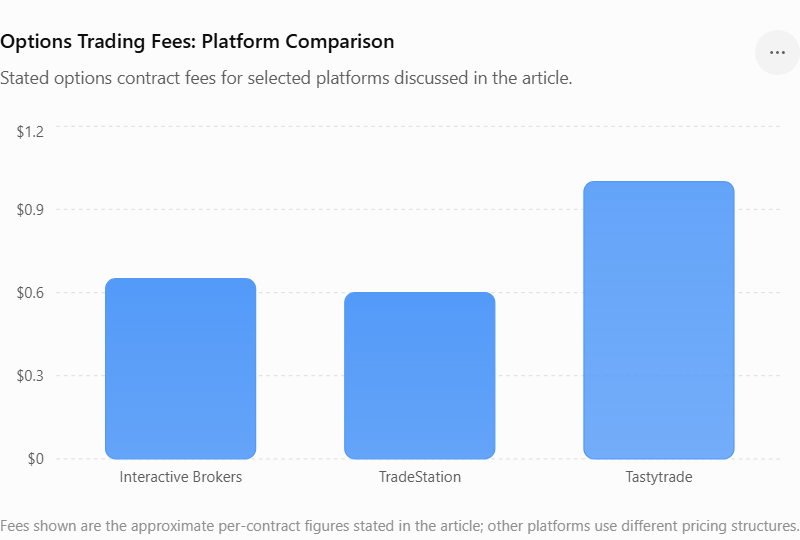
- Offers low commissions of up to USD 0.65 per contract.
- Provides access to a wide range of products and international markets.
- Includes advanced research and trading tools.
- Has no minimum deposit requirement.
- Is regulated by multiple international financial authorities.
- Suitable for traders ranging from beginners to professionals.
IBKR also provides access to real US stock and index options, futures, and equities across global markets. It is particularly suitable for advanced options traders looking for deep liquidity, competitive margins, and access to CBOE options chains.
2. Webull
Webull is an attractive choice for traders looking for commission-free options trading.
- Offers commission-free options trading with no platform or contract fees under applicable promotional conditions.
- Provides customizable options chains and probability analysis.
- Has a user-friendly interface.
- Supports US stocks and options.
- Particularly suitable for traders who prefer an easy-to-use mobile trading platform.
3. Tastytrade
Tastytrade is well suited to traders interested in social trading and developing their options trading knowledge.
- Provides options trading alongside futures, stocks, ETFs, and cryptocurrencies.
- Offers features designed to support learning and options trading development.
- Charges approximately USD 1 per options contract.
For readers who are still developing their understanding of the markets, our guide to forex trading for beginners provides additional foundational information.
4. TradeStation
TradeStation is known for its research tools and broad selection of trading products.
- Provides options trading and advanced research features.
- Charges approximately USD 0.60 per options contract plus a flat USD 5 fee.
- Suitable for traders who focus on research and advanced options strategies.
5. IG Markets
IG Markets provides indirect options exposure through CFDs.
- Offers options trading through CFDs.
- Does not charge commission on options.
- Has a higher minimum deposit of approximately ZAR 4,000.
- Suitable for traders interested in volatility and indices.
- Provides flexible expiry dates.
However, IG’s availability for South African clients needs to be considered carefully. The supplied information notes that IG has ceased accepting new trading accounts in South Africa, while existing international accounts continue to operate through IG International.
Read: Forex Trading Account Beginner’s Guide for Malaysians
6. Plus500
Plus500 can be useful for beginners who want to practice through a demo account.
- Offers a user-friendly interface.
- Provides a demo account for practice.
- Has relatively minimal spreads.
- Has a minimum deposit of approximately ZAR 1,500.
- Options trading is more limited because it primarily provides CFD-based exposure.
Local Options Trading Platforms in South Africa
For traders who prefer local access and ZAR-based trading, South African institutions can provide access to JSE-listed products.
Standard Bank WebTrader / Absa Stockbrokers are listed as local options for traders seeking JSE equity options and Single Stock Futures (SSFs). These platforms provide access to locally listed products and are regulated through the relevant South African financial-market framework.
Standard Bank’s local online trading platform provides access to JSE-listed shares and derivatives. Its brokerage fees for local trades are approximately 0.15% of the transaction value with no minimums, while the platform also supports products such as futures, ETFs, CFDs, and warrants.
For traders comparing different markets and platforms, understanding the broader range of forex trading platforms can also help when evaluating features, accessibility, and trading tools.
Interactive Brokers Fees and Market Access
For traders primarily interested in US options, Interactive Brokers stands out because of its competitive pricing and broad market access.
Options contracts cost around $0.65 per contract, while the platform does not charge account or inactivity fees. Deposits and withdrawals are also described as free in the supplied information.
This makes IBKR particularly attractive for traders in Gauteng who want access to international options markets without relying solely on local derivative products.
Real Options vs. CFD Options
One of the most important factors when choosing an options platform is understanding the difference between real exchange-traded options and CFD-based options.
International brokers such as Interactive Brokers provide access to actual exchange-traded options, where traders can buy or write options contracts directly on exchanges such as US options markets.
By contrast, CFD providers such as AvaTrade and IG offer options through Contracts for Difference. These products track option prices rather than representing the exchange-cleared options contract itself.
Understanding the difference between products is important when comparing forex brokers, particularly because fees, execution, leverage, regulation, and market access can vary between providers.
Funding and Exchange Controls
South African traders using offshore brokers such as IBKR need to consider the country’s foreign-exchange and offshore funding requirements.
The supplied information states that traders may use the South African Single Discretionary Allowance of R1 million per year or the Foreign Capital Allowance of up to R10 million with tax clearance through their local bank to fund an offshore account in USD. Local CFD brokers can instead allow ZAR deposits through methods such as EFT or credit card.
Tax Considerations for Options Traders
Tax treatment is another important consideration for South African options traders.
The supplied information states that options trading profits may generally be treated by SARS as income rather than capital gains when trading is conducted actively or speculatively. Traders should therefore maintain detailed records of option premiums, exercises, expirations, and related transactions.
Because individual tax circumstances can differ, traders should confirm their specific position with a qualified South African tax professional.
Read: Options Trading in South Africa
Options Trading Fees Comparison
| Broker / Platform | Options Trading Fees | Main Advantage |
|---|---|---|
| Interactive Brokers | Up to about $0.65 per contract | Low fees and broad US/global market access |
| Webull | Commission-free under applicable conditions | Simple platform and options tools |
| Tastytrade | About $1 per contract | Learning and social trading |
| TradeStation | About $0.60 per contract + $5 flat fee | Research and advanced trading |
| IG Markets | Commission-free CFD options | Flexible CFD-based exposure |
| Plus500 | CFD-based pricing | Beginner-friendly demo account |
| Standard Bank | About 0.15% for local share trades | Local JSE access |
The supplied information also notes that fees can vary between brokers and that traders should check contract fees, minimum commissions, inactivity fees, data fees, and other applicable charges before opening an account.
Which Options Trading Platform Is Best for Gauteng Traders?
For traders in Gauteng seeking US options and broad international market access, Interactive Brokers stands out as the strongest overall choice because of its low fees, extensive market access, and support for real exchange-traded options.
For local JSE options and derivatives, Standard Bank provides a solid local option with access to JSE-listed products.
For traders interested in CFD-based options, platforms such as IG and AvaTrade may be worth considering, while Webull, Tastytrade, and TradeStation provide alternative international options-trading environments with different fee structures and platform features.
Key Factors to Consider Before Choosing a Broker
Before selecting an options trading platform, consider:
- Whether you want real exchange-traded options or CFD-based options.
- The markets and exchanges you need access to.
- Per-contract commissions and other trading costs.
- Minimum deposits and account requirements.
- Funding and foreign-exchange requirements.
- Regulatory status and investor protections.
- Platform usability and available research tools.
- Options-chain functionality and analysis tools.
- Your experience level and preferred trading strategy.
- The tax treatment applicable to your trading activity.
Most of the platforms discussed are accessible online to traders in Gauteng and across South Africa. Your choice should ultimately depend on your trading style, desired market access, costs, and whether you prefer direct options trading or CFD-based exposure.
Effective risk control is also important when trading leveraged products. Traders can learn more about forex risk management for beginners to better understand position sizing and risk-management principles.
For sophisticated traders seeking international options markets, Interactive Brokers is the leading choice among the platforms covered. Its competitive contract pricing, broad market access, and support for real US options make it particularly suitable for traders looking beyond South Africa.
For traders who prefer local JSE exposure, South African banks and brokers can provide access to locally listed derivatives.
Regardless of the platform selected, options trading involves significant risk. Traders should understand the product they are using, the fees involved, funding requirements, and potential losses before committing capital. In particular, selling options can expose traders to losses beyond their initial investment.
A structured forex trading plan can also help traders establish clear rules around entries, exits, position sizing, and risk before placing trades.
Traders should also understand the psychological side of financial markets. Our guide to forex trading psychology covers the importance of maintaining discipline and managing emotions while trading.