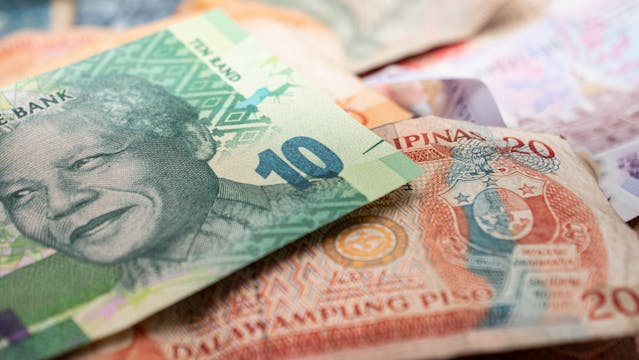
A forex trading account is a specialised financial account provided by a brokerage that allows individuals to buy, sell, and speculate on global currency pairs. It acts as a gateway to the foreign exchange market, holding your capital and facilitating trades across global exchange rates such as USD/MYR, EUR/USD, and GBP/USD. For beginners in Malaysia, opening a forex trading account requires careful evaluation of broker regulatory oversight, trading costs like spreads and overnight fees, currency conversion rates from Malaysian Ringgit (MYR), and the high financial risks associated with leveraged trading.
What Is a Forex Trading Account?
A forex trading account functions similarly to a digital bank account, but it is built specifically for executing currency market transactions. When you open an account with a forex broker, you gain access to an online trading platform that streams live price quotes from international liquidity providers.

Through this account, you allocate capital to open positions on the price movements of global currencies. Unlike exchanging physical cash at a licensed money changer in Kuala Lumpur or George Town for overseas travel, an online forex account allows you to trade currency price fluctuations electronically through derivative contracts without taking physical delivery of banknotes.
Read: Options Trading in Malaysia: Brokers, Tax & Guide
How Does a Forex Trading Account Work?
Operating a forex account involves several core mechanics that govern how your money moves, how trades execute, and how gains or losses are calculated.
| Broker Platform | Flow | Broker Platform |
|---|---|---|
| Deposit (MYR → Base) | → | Available Margin |
| Live Market Quotes(Bid / Ask Spread) | → | Order Execution(Leveraged Position) |
| ↓ | ||
| Position Close | → | Realised P&L |
| ↓ | ||
| Withdrawal to Bank | ← | Realised P&L |
1. Deposits and Base Currencies
To begin, you deposit funds into the account. Most international brokers set their account base currency in US Dollars (USD), Euros (EUR), or British Pounds (GBP). When funding an account from a Malaysian bank, your MYR is converted into the account’s base currency at the prevailing exchange rate.
2. Currency Pairs and Price Quotes
Currencies always trade in pairs, such as EUR/USD or USD/JPY. The first currency is the base currency, and the second is the quote currency.
- The Bid price is the rate at which you can sell the base currency.
- The Ask price is the rate at which you can buy the base currency.
3. Spreads
The difference between the Bid and the Ask price is called the spread, measured in pips. The spread represents the primary transaction cost charged by the broker to execute your order.
4. Leverage and Margin
Forex brokers offer leverage, allowing traders to control larger market positions with a smaller capital deposit known as margin.
- For example, with 1:100 leverage, a margin deposit of 100 USD allows you to open a position worth 10,000 USD.
- While leverage magnifies potential gains, it equally multiplies potential losses.
5. Order Execution
When you place a buy (long) or sell (short) order on your trading platform, the broker routes your request to liquidity providers or fills it internally. The speed and quality of execution determine whether you enter the market at your requested price.
6. Profit and Loss Calculation
Your profit or loss (P&L) depends on the price difference between your entry point and exit point, multiplied by the position size (lot size):
- If you buy EUR/USD and the exchange rate rises before you close the trade, you secure a profit.
- If the rate falls below your entry price, your account balance decreases by that loss.
7. Withdrawals
When you close your trades, your remaining balance, including any realised profits, can be withdrawn back to your local bank account, digital wallet, or payment card according to the broker’s settlement procedures.
Read: Forex Risk Management for Beginners
Types of Forex Trading Accounts
Brokers provide various account tiers tailored to different trading capital levels, experience, and personal requirements.
Forex Trading Account Types
| Account Type | Key Features |
|---|---|
| Demo Account | Virtual funds, zero risk |
| Standard Account | Spread-only, no commission |
| Raw Spread / ECN | Zero/tight spread, fixed commission |
| Islamic Account | Swap-free, no overnight interest |
Forex Demo Account
A demo account simulates live market conditions using virtual funds. It enables beginners in Malaysia to test trading platforms, learn chart analysis, and practise risk management strategies without putting real capital at risk.
Standard Account
Standard accounts are popular among retail traders. They typically feature commission-free trading, where the broker’s fee is built directly into a wider spread (for example, 1.0 to 1.5 pips on EUR/USD). They offer standard trade sizing starting from 0.01 micro-lots.
Read: Complete guide to forex trading in Malaysia
Raw-Spread / ECN-Style Account
ECN (Electronic Communication Network) or Raw-Spread accounts offer direct market spreads starting as low as 0.0 pips. Instead of widening the spread, the broker charges a flat commission per lot traded (e.g., 6 to 7 USD round turn). Experienced active day traders often choose this model for tighter entry pricing.
Cent or Micro Account
A cent account calculates your balance in cents (e.g., 10 USD displays as 1,000 cents). This account type lets beginners transition from a demo environment to real market execution with minimal financial exposure, trading in very small position sizes.
Islamic (Swap-Free) Account
An Islamic forex trading account complies with Shariah principles by eliminating overnight rollover fees (riba or swap charges). When positions remain open past the daily market cut-off, no interest is debited or credited. Many Malaysian traders use swap-free accounts to trade in alignment with their religious values.
Read: Metatrader 4 vs 5
How to Choose a Forex Trading Account in Malaysia
Selecting the right broker requires thorough research. Consider the following criteria before depositing funds:
| Forex Account Selection Checklist | Details |
|---|---|
| ☐ Regulatory Oversight | Tier-1 international regulatory licences |
| ☐ Trading Costs | Spreads + round-turn commission structure |
| ☐ Deposit/Withdrawal Options | MYR banking channels & processing time |
| ☐ Platform Reliability | MetaTrader 4/5, cTrader, low latency |
| ☐ Execution Speed & Slippage Policy | Direct routing, no requotes |
| ☐ Account Security | Segregated client bank accounts, 2FA |
| ☐ Swap-Free / Islamic Account Availability | Swap-free account option |
| ☐ Customer Support | Live chat during Malaysian trading hours |
1. Regulatory Status and Safety of Funds
Prioritise brokers authorised by strict international regulatory bodies such as the UK Financial Conduct Authority (FCA), the Australian Securities and Investments Commission (ASIC), or the Cyprus Securities and Exchange Commission (CySEC). In Malaysia, foreign exchange regulations fall under the jurisdiction of Bank Negara Malaysia (BNM) and the Securities Commission Malaysia (SC). Traders must understand that offshore, unlicensed entities lack domestic legal recourse if a dispute arises.
2. Total Trading Costs (Spreads and Commissions)
Evaluate all potential costs:
- Spread width across major pairs during high-liquidity sessions.
- Per-lot commission rates on raw accounts.
- Inactivity fees if you do not place trades for several months.
3. Execution Quality and Latency
Slippage occurs when market volatility causes trades to execute at a different price than requested. Reliable brokers utilize low-latency data centres (e.g., in London or New York) and provide transparent order execution without frequent requotes.
Read: MetaTrader 4 Malaysia: Complete Guide
4. Trading Platforms Available
Verify that the broker supports reliable trading software:
- MetaTrader 4 (MT4) and MetaTrader 5 (MT5): Industry-standard platforms known for custom indicators and automated Expert Advisors (EAs).
- cTrader: Valued for intuitive order management and depth-of-market tools.
- Proprietary Web/Mobile Apps: Convenient for checking positions on mobile devices across Selangor, Johor, or Sabah.
5. Deposit and Withdrawal Convenience
Check supported funding channels, processing times, and currency conversion fees. Common methods include online bank transfers, credit/debit cards, and international payment gateways. A reputable broker processes withdrawals within 1 to 3 business days without unnecessary delays.
6. Customer Support Availability
Currency markets operate 24 hours a day, 5 days a week. Malaysian traders are most active during the London-New York session overlap (8:00 PM to 12:00 AM Malaysian Standard Time / MYT). Responsive 24/5 or 24/7 customer service via live chat is essential if platform issues arise during evening trading hours.
Read: Weakest Currencies in the World
Forex Trading Account Requirements
To comply with international Anti-Money Laundering (AML) and Know Your Customer (KYC) regulations, reputable brokers require account verification before you can trade or withdraw funds.
Standard Verification Documents
| Proof of Identity (POI) | Proof of Address (POA) |
|---|---|
| • Malaysian National ID (MyKad) | • Malaysian Utility bill (Tenaga Nasional, water, etc.) |
| • Valid Malaysian Passport | • Local bank account statement |
| • Valid Malaysian Driver’s Licence | • Internet / postpaid phone bill (Issued within last 3 months) |
Core Requirements:
- Minimum Age: You must be at least 18 years old.
- Proof of Identity (POI): A clear, colour copy of your Malaysian National Identity Card (MyKad), passport, or driver’s licence.
- Proof of Address (POA): A recent utility bill (such as electricity or water), broadband bill, or bank account statement issued within the last 3 months displaying your full name and residential address.
- Valid Email and Contact Number: Required for two-factor authentication (2FA) and account security alerts.
- Financial Appropriateness Assessment: A brief questionnaire assessing your employment status, income source, and familiarity with leveraged trading risks.
How to Open a Forex Trading Account: Step-by-Step
Setting up an online forex trading account involves a direct, structured process.
| Step | Action | Details |
|---|---|---|
| Step 1 | Research & Select a Broker | Compare regulation, costs, platforms, and services |
| Step 2 | Choose Account Type | Demo / Standard / Raw / Islamic |
| Step 3 | Complete Online Registration Form | Enter your personal and account details |
| Step 4 | Upload Verification Documents | MyKad / Passport & Utility Bill |
| Step 5 | Fund Your Trading Account | Deposit funds using an available payment method |
| Step 6 | Download Trading Platform | MT4, MT5, or cTrader |
| Step 7 | Configure Risk Controls & Begin | Set Stop-Loss and position sizing before trading |
Step 1: Research and Compare Providers
Examine international regulatory credentials, fee schedules, swap policies, and platform stability. Ensure the broker accepts Malaysian residents.
Step 2: Choose Your Account Type
Select an account model that matches your strategy and starting capital. Beginners often start with a cent or standard account, while Muslim traders can request an Islamic swap-free configuration.
Step 3: Fill Out the Application Form
Visit the broker’s official website. Provide your legal name matching your MyKad, email address, residential address, and phone number.
Step 4: Complete Identity Verification
Upload digital scans or clear photos of your POI (MyKad/Passport) and POA (Utility bill/Bank statement). Verification typically takes between 1 hour and 1 business day.
Read: FNB Universal Branch Code South Africa
Step 5: Fund Your Account
Log into the secure client portal. Navigate to the deposit section, choose your payment method, and transfer your starting capital. Ensure you only trade with risk capital—money you can afford to lose.
Step 6: Download the Trading Platform
Install MT4, MT5, cTrader, or the broker’s proprietary mobile app on your desktop or smartphone. Log in using the trading account credentials sent to your email.
Step 7: Test Your Platform and Apply Risk Controls
Open a test trade on a micro-lot setting. Set strict Stop-Loss and Take-Profit levels on every position to protect your account balance against adverse market moves.
Forex Demo Account vs Live Account
Before committing real capital, it helps to understand the practical differences between simulated and live trading environments.
| Feature | Forex Demo Account | Forex Live Trading Account |
|---|---|---|
| Capital Type | Virtual currency (no financial risk) | Real capital deposited by the trader |
| Financial Risk | Zero loss of real funds | High risk of capital loss |
| Order Execution | Simulated fills without real liquidity constraints | Subject to real-market liquidity, slippage, and spreads |
| Psychological Factor | Low stress; no real fear or greed | Real emotional pressure that impacts decision-making |
| Primary Purpose | Platform familiarisation and strategy testing | Active market participation and profit generation |
| Account Expiry | Some brokers expire demo accounts after 30–90 days | Remains active as long as funded or periodically traded |
Forex Trading Costs Explained
Understanding broker charges prevents unexpected deductions from eroding your returns.
| Cost Type | How It Is Charged |
|---|---|
| Spread | Difference between Bid and Ask price per trade |
| Commission | Flat rate per lot (common on ECN accounts) |
| Overnight Swap Fee | Rollover interest for holding positions past 5:00 PM EST (waived on Islamic accounts) |
| Currency Conversion | Fee applied when converting MYR deposits into USD or EUR base accounts |
| Payment Processing Fees | Transaction fees applied by banks or gateways |
| Slippage | Difference between requested and filled price |
1. Spreads
The spread is quoted in pips. If EUR/USD has a Bid of 1.0850 and an Ask of 1.0851, the spread is 1 pip. On a standard lot (100,000 units), 1 pip equals 10 USD. Tight spreads lower the cost of entering and exiting trades.
2. Trading Commissions
On raw-spread accounts, brokers charge a commission per transaction (e.g., 3.50 USD per side, total 7.00 USD round turn per standard lot). Traders must calculate whether a lower spread with commission is more economical than a zero-commission account with a wider spread.
3. Overnight Rollover (Swap Charges)
Holding a leveraged forex position overnight incurs an interest differential fee known as a swap. Depending on the interest rate divergence between the two currencies, swaps can be either a debit or a credit to your account. Swap-free Islamic accounts waive these charges.
Read: Islamic Forex Trading in Malaysia
4. Currency Conversion Costs
Because most accounts settle in USD, deposits made from a Malaysian bank account in MYR undergo currency conversion. Banks and payment processors may charge a conversion markup over interbank rates.
5. Slippage
During major economic releases (such as US Non-Farm Payrolls or interest rate decisions), rapid price changes can cause market orders to fill a few pips away from the requested price. This difference represents an indirect trading cost.
Risks of Forex Trading
Forex trading involves substantial financial exposure. Retail traders should understand the main risk factors before participating in the market.
Forex Trading Risks
| Risk Type | Description |
| Leverage Risk | High leverage amplifies losses |
| Market Volatility | Sudden macroeconomic shifts can trigger rapid margin calls |
| Counterparty Risk | Unregulated brokers and withdrawal scams |
| Emotional Traps | Revenge trading and lack of discipline |
1. Leverage Risk
Leverage amplifies losses as well as profits. An adverse price move on a heavily leveraged position can deplete your entire account balance in minutes.
2. Margin Calls and Stop-Outs
If open trade losses cause your account equity to drop below the broker’s maintenance margin requirement, you will receive a margin call. If capital is not added, the broker’s automated system triggers a stop-out, closing your positions at current market rates to prevent negative balances.
3. Market Volatility
Geopolitical developments, inflation data, and central bank policy changes can cause extreme price spikes. Traders in Malaysia who hold open positions overnight without stop-loss orders face potential losses during European and US trading sessions.
Read: Forex Trading Taxes in Malaysia
4. Broker and Counterparty Risk
Depositing funds with unregulated or shady offshore brokers introduces counterparty risk. Such entities may manipulate platform prices, reject legitimate withdrawal requests, or disappear entirely.
5. Psychological and Emotional Traps
Fear, greed, and the urge to “revenge trade” after a loss lead to undisciplined decision-making. Overtrading without a structured plan remains one of the primary reasons retail traders lose money.
Common Mistakes Malaysian Beginners Should Avoid
New traders often encounter preventable pitfalls. The table below outlines these common errors alongside practical solutions.
| Beginner Mistake | Recommended Solution |
|---|---|
| 1. Excessive LeverageUsing 1:500 on small deposits leads to quick stop-outs. | Cap leverage at 1:10 or 1:30 while learning. Never risk more than 1% to 2% of total equity on a single position. |
| 2. Trading Without Stop-LossesAllowing losing trades to run in hope of a market reversal. | Always set a hard Stop-Loss order at the moment of trade execution. Protect capital before targeting profits. |
| 3. Unregulated Broker ScamsJoining social media schemes promising guaranteed returns. | Independently verify broker licences on official tier-1 regulatory portals (e.g., FCA, ASIC). Avoid investment groups claiming “guaranteed profits.” |
| 4. Ignoring the Economic CalendarEntering trades right before high-impact news releases. | Monitor major macroeconomic announcements (US CPI, FOMC, interest rate decisions) to avoid sudden volatility spikes and wide spreads. |
| 5. Skipping Demo PracticeJumping straight into live trading without testing. | Spend at least 4 to 8 weeks on a demo account refining position sizing, platform mechanics, and trade journals before depositing real money. |
Read: Best Forex Trading Platforms in Malaysia
Realistic Trading Scenario: The Cost of Over-Leveraging
Consider a beginner based in Petaling Jaya who deposits 500 USD into a live account.
- Scenario A (Aggressive Leverage): The trader opens a 1.0 standard lot position on GBP/USD using 1:500 leverage. Each pip movement equals roughly 10 USD. If the market moves 40 pips against the position, the account loses 400 USD—80% of the entire deposit—triggering an immediate margin call.
- Scenario B (Disciplined Risk Management): The trader opens a 0.02 micro-lot position, where each pip equals 0.20 USD. A 40-pip adverse move results in an 8.00 USD loss (1.6% of the balance). The trader retains capital to participate in subsequent trading setups without emotional panic.
Read: Forex Trading Hours in Malaysia
Malaysian Market Context: Time Zones and Currency Pairs
Trading forex from Malaysia provides unique time-zone advantages for active market sessions.
| Session | Malaysian Time (MYT / UTC+8) | Key Characteristics |
|---|---|---|
| Tokyo / Asian Session | 08:00 AM – 04:00 PM | Asian market activity and generally lower liquidity |
| London Session | 04:00 PM – 12:00 AM | Higher liquidity and increased market activity |
| New York Session | 08:00 PM – 05:00 AM | High liquidity, particularly during the London–New York overlap |
| London–New York Overlap | 08:00 PM – 12:00 AM | Peak liquidity and increased trading activity |
Key Time-Zone Considerations:
- Asian Session (8:00 AM – 4:00 PM MYT): Typically characterized by moderate volatility, focusing on AUD, NZD, and JPY pairs.
- London Session (4:00 PM – 12:00 AM MYT): Volatility increases significantly as European institutions begin trading EUR, GBP, and CHF.
- New York & London Overlap (8:00 PM – 12:00 AM MYT): The most liquid window of the 24-hour cycle. Traders across Kuala Lumpur, Penang, Melaka, and Johor Bahru often trade during this evening window due to tight spreads and clear directional volume on major USD pairs.
Read: Best Forex Brokers in Malaysia
Frequently Asked Questions
What is a forex trading account?
A forex trading account is an online account provided by a brokerage that allows you to buy and sell global currency pairs electronically using leverage.
Can Malaysians open a forex trading account?
Yes, Malaysian residents can open accounts with international forex brokers that accept clients from Malaysia. Traders must conduct their own due diligence regarding broker legitimacy, international regulation, and domestic guidelines issued by Bank Negara Malaysia (BNM) and the Securities Commission Malaysia (SC).
How much money is needed to start forex trading?
Many brokers allow account opening with minimum deposits ranging from 10 USD to 100 USD (approximately 45 to 450 MYR). However, trading with adequate capital and conservative position sizing helps manage risk effectively.
What is the difference between a demo and live forex account?
A demo account uses virtual money in simulated conditions for risk-free practice. A live account uses real deposited funds where market trades carry actual financial gain or loss.
What should I check before choosing a forex account?
Verify the broker’s international regulatory licences, total transaction fees (spreads and commissions), swap-free Islamic options, deposit and withdrawal processing reliability, platform stability, and customer support availability during Malaysian trading hours.
Is forex trading risky?
Yes. Forex trading involves significant financial risk, particularly due to leverage. High leverage can lead to the rapid loss of your entire investment balance if market movements go against your positions.
What fees are associated with a forex trading account?
Typical fees include the Bid/Ask spread, per-lot commissions on raw-spread accounts, overnight financing (swap) charges on held positions, and potential currency conversion fees when depositing or withdrawing in MYR.
What is leverage in forex trading?
Leverage is a facility provided by brokers allowing traders to control larger market positions with a fraction of the total trade value as a margin deposit. While it can magnify profits, it increases the speed and magnitude of potential capital losses.
Related Pages: Best Options Trading Platforms in Gauteng, MetaTrader 4 vs 5, Dolce Vita Trading, Options Trading in South Africa