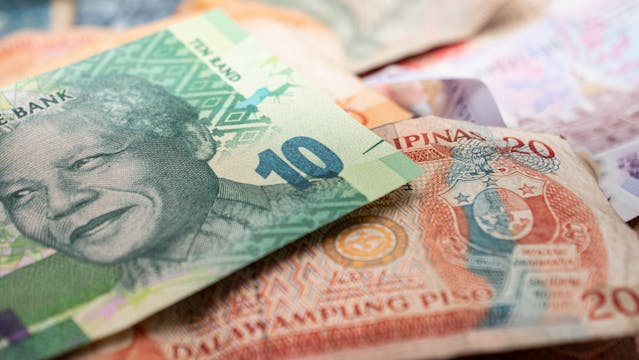
The global financial landscape of May 2026 is no longer defined by a single Greenback superpower. As India takes the chair for the 2026 BRICS summit, the conversation around de dollarization has shifted from fringe economic theory to a structural market reality. For the retail Forex trader and commodity investor, the question isn’t whether the Dollar will disappear, but how its changing role is fragmenting market liquidity and redefining price action across the majors.
To navigate this multipolar world, you must look past the sensationalist headlines and understand the mechanics of the BRICS Pay rollout and the emergence of non USD commodity settlement. In this analysis, we break down why the Rate War of 2025 has evolved into the Reserve War of 2026.
The BRICS Pay Rollout: A New Infrastructure for Global Liquidity
The most significant development in 2026 is the functional launch of BRICS Pay. Unlike previous attempts at currency cooperation, this is a blockchain integrated system designed to bypass the SWIFT network for bilateral trade between member nations. For the first time, we are seeing off ramp liquidity where trade between New Delhi and Riyadh or Beijing and Brasilia never touches a US correspondent bank.
Read: Weakest Currencies in the World
This infrastructure shift is creating a Liquidity Split in the Forex markets. Historically, every major trade was a USD Leg trade. Today, the rise of CBDC (Central Bank Digital Currency) bridges means that the US Dollar’s middleman fee is being eroded. For retail traders, this translates to a subtle but persistent shift in Average True Range (ATR) and volatility patterns during the Asian and London market overlaps.
If you are looking to adapt your strategy to these shifting liquidity pools, our professional Forex trading and investment management consultancy provides the institutional grade data needed to track these non traditional flows.
De-Dollarization and the Retail Forex Trader: What Changes?
The primary concern for the retail community is how de-dollarization affects the Majors, specifically the EUR/USD, GBP/USD, and USD/JPY. While the US Dollar remains the world’s primary reserve asset, its share in global trade settlement has dipped below 45% for the first time in decades.
This creates three distinct challenges for retail practitioners:
- Spread Fragmentation: As liquidity moves into local currency pairs like USD/INR or USD/SAR, the depth of the Big Three pairs is slightly diluted. You may notice wider spreads during high impact news events as the USD Buffer thins.
- The End of Correlation Stability: Traditional correlations, such as the inverse relationship between the USD and Gold, are breaking down. We are seeing periods where both the USD and Gold rise simultaneously as BRICS nations accumulate bullion while the US keeps rates high.
- Macro Event Risk: A single announcement from a BRICS summit regarding a gold backed Unit can now cause a 100-pip Flash Event in the Greenback. These are not driven by US economic data, but by geopolitical sentiment shifts.
Commodity Markets: The Rise of Dual Pricing in Oil and Gold
Commodities are the front line of the 2026 de-dollarization movement. The Petrodollar was built on the agreement that energy would be priced exclusively in USD. That agreement has officially entered a state of strategic optionality.
The Gold Standard 2.0
BRICS central banks have become the world’s largest net buyers of gold, treating it as the ultimate neutral reserve asset. This accumulation has created a structural floor for XAU/USD. In 2026, gold is no longer just a hedge against inflation; it is being used as a settlement anchor for the proposed BRICS Unit. For commodity traders, this means that Buy the Dip is no longer just a mantra, it is backed by central bank policy.
Oil and the Currency Basket
With the integration of Saudi Arabia and the UAE into BRICS+, we are seeing oil settled in a basket of currencies. This Dual Pricing regime means that Brent and WTI prices are becoming increasingly sensitive to the fiscal health of the Asian giants, China and India, rather than just US inventory reports.
Impact on Major Currency Pairs: A 2026 Forecast
As de-dollarization accelerates, we expect to see a Yield vs. Sovereignty battle. The US Dollar will remain strong as long as the Fed maintains a yield advantage, but its Safe Haven premium is being challenged by the Swiss Franc (CHF) and Gold.
- EUR/USD: Expect the Euro to act as a middle ground currency. If BRICS nations diversify out of the USD, a significant portion of that capital often flows into the Eurozone’s high quality debt, providing a counter intuitive boost to the Euro during periods of US political uncertainty.
- USD/INR: As India leads the 2026 BRICS initiatives, the Rupee is transitioning from a restricted currency to a regional powerhouse. Volatility in the INR is now a leading indicator for Emerging Market (EM) sentiment.
Managing these Step Shift movements requires a move away from retail level gambling and toward a professional mindset. We offer bespoke forex trading solutions and risk management plans designed to help you quantify geopolitical risk before it hits your equity.
Risk Management: The 2% Rule in a Multipolar World
The greatest risk of de-dollarization is The Unknown Unknown. In a USD centric world, the rules were clear. In a multipolar world, Black Swan events, like a sudden shift in energy settlement terms, can happen overnight.
This is why we advocate for the 2% Rule more than ever. Your maximum risk on any single trade must remain at or below 2% of your total account equity. In 2026, Gap Risk is real. If you are over leveraged when a BRICS headline drops, a 50-pip gap can wipe out a retail account that isn’t using professional grade protection.
To protect your capital against these structural shifts, you must implement max drawdown control and the 2% rule to ensure that no single geopolitical event ends your trading career.
Choosing the Right Partners for 2026
In an era of de-dollarization, your choice of broker is a strategic decision. You need a partner that provides deep liquidity and transparent execution across both the USD majors and the emerging BRICS crosses.
Many retail platforms struggle with slippage during the Liquidity Splits we’ve discussed. We provide access to Regulated Forex broker partners and liquidity providers who have been audited for their ability to handle high volatility regimes without compromising on execution speed.
Building a Resilient Portfolio for the Future
De-dollarization is not an overnight collapse. It is a multi decade transition that is entering a high velocity phase in 2026. As a practitioner, your job is not to fear the change, but to trade the volatility it creates.
By diversifying your focus beyond just the US centric majors and incorporating Hard Assets like Gold and Silver into your analysis, you can turn a geopolitical threat into a consistent trading edge. To start building your professional framework, we recommend studying our guide on building a Forex trading plan which has been updated to include multi currency reserve analysis.
Reality Over Rhetoric
Is the Dollar dying? No. But its monopoly is ending. The 2026 Forex market is more complex, more fragmented, and more exciting than ever before. By focusing on liquidity flows, central bank accumulation, and strict risk first strategies, the modern practitioner can thrive in the BRICS Era while others are left wondering why their old 2024 strategies no longer work.
About the Author:
Bhagesh Nair is the Founder and Chief Market Analyst at PipInfuse. With over 12 years of professional experience in global financial markets, Bhagesh is a leading voice in practitioner first Forex analysis and risk management. Based in India, he specializes in navigating high volatility regimes and helps a global network of over 22,000 traders transition from retail speculation to institutional grade execution. His philosophy is built on the pillars of transparency, capital preservation, and the relentless pursuit of market truth.
Related Pages: Trading and Investment Services, Forex Trading Solutions, Forex Trading and Investment Consultancy