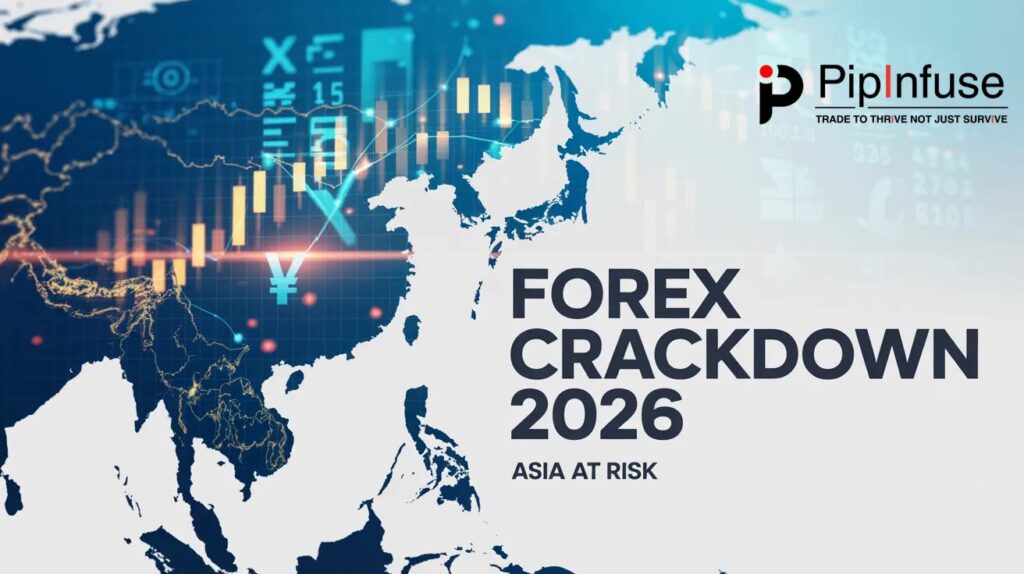
The Asia forex trading crackdown 2026 is no longer a distant regulatory warning, it is a rapidly unfolding reality that is fundamentally shifting how retail investors access global currency markets. The global currency market is currently weathering a regulatory storm that few saw coming. As of April 2026, the landscape for retail forex trading in Asia has shifted from a high leverage playground into a strictly monitored zone. Driven by extreme volatility in the Indian Rupee (INR) and the broader impact of the West Asia energy crisis, central banks are tightening the noose on unauthorized platforms and speculative derivative contracts.
For the average retail trader, this isn’t just news, it is a systemic risk to their capital. If you are navigating the markets today, understanding these shifts is no longer optional, it is a prerequisite for survival.
India’s Aggressive Stance on Unauthorized Offshore Trading
The Reserve Bank of India (RBI) has historically been the most vocal opponent of retail offshore forex trading. While the RBI Alert List has existed for years, 2026 marks a shift from mere warnings to active enforcement. With the Rupee facing unprecedented pressure from global energy prices, the RBI has recently clamped down on Non Deliverable Derivative (NDD) contracts, effectively closing loopholes that allowed domestic traders to speculate against the Rupee through offshore entities.
If you are currently trading with an offshore broker without a clear understanding of the LRS (Liberalised Remittance Scheme) limits, you are likely in violation of FEMA guidelines. This isn’t just about losing a trade, it involves the legal consequences of unauthorized outward remittances. To ensure your market participation remains compliant and secure, you can explore our expert forex trading and investment management consultancy to align your strategy with current regulatory standards.
Japan’s Takaichi Trade and the FSA’s Leverage Capping
In Tokyo, the story is about protecting the retail Mrs. Watanabe from the fallout of political volatility. Following the February 2026 elections and the subsequent market shifts, often dubbed the Takaichi Trade, the Japanese Financial Services Agency (FSA) has introduced even more stringent capital adequacy requirements for brokers. These measures aim to curb the excessive leverage that led to massive retail wipeouts during the Yen’s recent erratic swings.
Japanese regulators are now focusing on slippage transparency, forcing brokers to disclose exactly how orders are filled during high volatility news events. For the retail trader, this means that while the market is technically safer, the easy money from high leverage scalping has vanished. Survival in this new era requires a shift toward sophisticated, professional grade execution. Our global network of vetted and regulated forex broker partners specializes in connecting serious market participants with entities that prioritize these high standards of execution and safety.
South Korea’s Digital Asset and Forex Convergence
South Korea has long been a hotbed for retail speculation, but the FSS (Financial Supervisory Service) has recently launched its 2026 Strategic Plan to integrate forex and digital asset oversight. This move targets the Kimchi Premium and unauthorized capital flight disguised as crypto forex arbitrage. The crackdown involves AI driven monitoring of bank transfers to offshore trading hubs, making it nearly impossible for retail traders to fund unauthorized accounts undetected.
The FSS is also tightening the screws on information providers, the YouTube and Telegram gurus who lure retail traders into unregulated platforms. In Seoul, being a successful trader now requires a verifiable audit trail. For those who need to restructure their trading operations to meet these modern institutional standards, our customized forex portfolio management solutions provide the professional bridge needed to move from amateur speculation to disciplined capital management.
The Viral Reality: Why Your Account Could Be Next
This crackdown is not happening in a vacuum. It is a regional response to the 2026 energy crisis and Geopolitical trigger the resulting currency wars. When a national currency is at risk, the first casualty is retail speculation. Regulators in Indonesia and Vietnam are following the lead of the Big Three (India, Japan, South Korea), launching their own task forces to shut down unregulated mirror trading and social trading apps that have dominated the region for the last decade.
The risk for 2026 is not just a bad trade, it is the risk of platform evaporation. When a regulator flags a broker, banking channels are cut off instantly. If your capital is sitting in an offshore account that is suddenly blacklisted, the chances of recovery are near zero. This is why we have emphasized the importance of our guide on 5 Critical Questions to Ask Before Choosing a Forex Portfolio Manager (Due Diligence Checklist) to help you verify the legitimacy of your service providers.
The Professional Shift is Mandatory
The era of casual forex trading in Asia is coming to an end. The 2026 crackdown is a signal that the market is maturing, and only those who treat trading as a professional business will survive. Transparency, due diligence, and a risk first philosophy are no longer just buzzwords, they are the only tools left for capital preservation.
If you are feeling the pressure of these regulatory shifts, do not wait for your account to be flagged. Take a proactive step by reviewing your trading infrastructure today. For more insights on navigating global market shifts and maintaining your edge in a restricted environment, stay updated with the latest analysis on our PipInfuse market insights and forex blog.
About the Author:
Bhagesh Nair is the Founder and Chief Market Analyst of PipInfuse. With over 12 years of experience navigating major global financial markets, Bhagesh specializes in macroeconomic trend analysis and high-discipline risk management. He is a recognized authority on market transparency and due diligence, dedicated to helping traders in India and across the globe navigate complex regulatory landscapes with institutional grade precision.